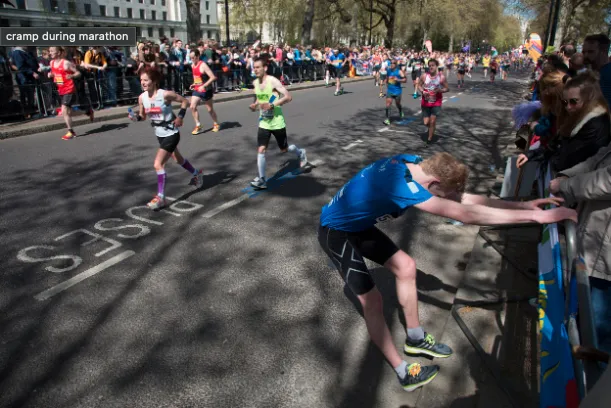
Why You're Cramping at Kilometre 30 (And It's Not What You Think)
You've trained for months. Your long runs have been solid. Race day arrives, and somewhere around kilometre 30 of your marathon — or the back half of your 70.3 bike leg — your calf locks up. Or your quad. Or both.
It's one of the most demoralising things that can happen to an endurance athlete, and it almost always comes with the same question: why?
The common answer — and the wrong one — is that you didn't drink enough water.
The dehydration myth
Cramping has been blamed on fluid depletion for decades. The advice that followed was logical but incomplete: drink more, and you won't cramp. The problem is that the science has never cleanly supported this. Plenty of athletes who drink consistently still cramp. And some athletes who are measurably dehydrated finish races without any muscle issues at all.
A landmark 30-year dataset from the Ironman World Championship in Kona — covering nearly 50,000 race participants — found that cramping athletes did lose more body weight during the race (a marker of dehydration), but that their blood sodium levels were virtually identical to athletes who didn't cramp. If it were purely a dehydration issue, you'd expect the crampers to show clear differences in blood chemistry. They didn't.
So what's actually happening?
The real picture: it's multifactorial
The most well-supported current theory is that cramping is primarily a neuromuscular fatigue issue. When muscles are pushed beyond what they've been prepared for, the nerve signalling that controls contraction and relaxation breaks down. The muscle gets stuck in a sustained involuntary contraction. This is why cramping tends to hit in the latter stages of races — especially when athletes have gone out too hard early.
But here's the nuance: dehydration and sodium depletion make this worse.
Your muscles and nerves function better when they're adequately hydrated and when the fluid around them contains enough sodium. Blood tests don't capture what's happening at the muscle cell level — your body tightly regulates blood sodium by pulling it from other compartments, including the interstitial fluid around your muscles. So a normal blood test doesn't mean your muscles have all the sodium they need.
What this means practically
If you're a chronic cramper, there are two things you can actually control:
1. Pacing. The Kona data shows that faster athletes cramp more. Going out too hard relative to your training volume is one of the clearest risk factors. Your race pacing strategy matters at least as much as your hydration strategy.
2. Sodium replacement. Because sweat sodium varies enormously between individuals — from around 200mg per litre to over 2,000mg per litre — generic electrolyte advice is often wildly inaccurate for individual athletes. A salty sweater (high sodium concentration) losing large amounts of fluid during a hot race can deplete thousands of milligrams of sodium. Generic sports drinks rarely replace this.
The only way to know where you sit on that spectrum is to get your sweat tested. Once you know your sodium concentration and your sweat rate, you can build a hydration plan that actually replaces what your body is losing — rather than taking a best guess based on a product label.
