What "Salty Sweater" Actually Means — And How to Know If You're One
You've probably heard the term "salty sweater" — maybe applied to yourself after noticing white residue on your kit, or hearing someone explain why their electrolyte needs are higher than average.
But what does it actually mean scientifically, and how do you know if it applies to you?
The definition
A "salty sweater" is an athlete with a high sweat sodium concentration — meaning each litre of sweat they produce contains a relatively large amount of sodium. In practice, we generally use concentrations above around 1,000mg of sodium per litre as a reasonable threshold for "high," though the scale is continuous rather than binary.
At STV, I've tested athletes ranging from around 250mg/L at the low end to over 1,800mg/L at the high end. Someone at 1,800mg/L is genuinely losing seven times more sodium per litre of sweat than someone at 250mg/L.
Signs you might be a salty sweater
There's no substitute for a proper sweat test, but certain patterns are suggestive.
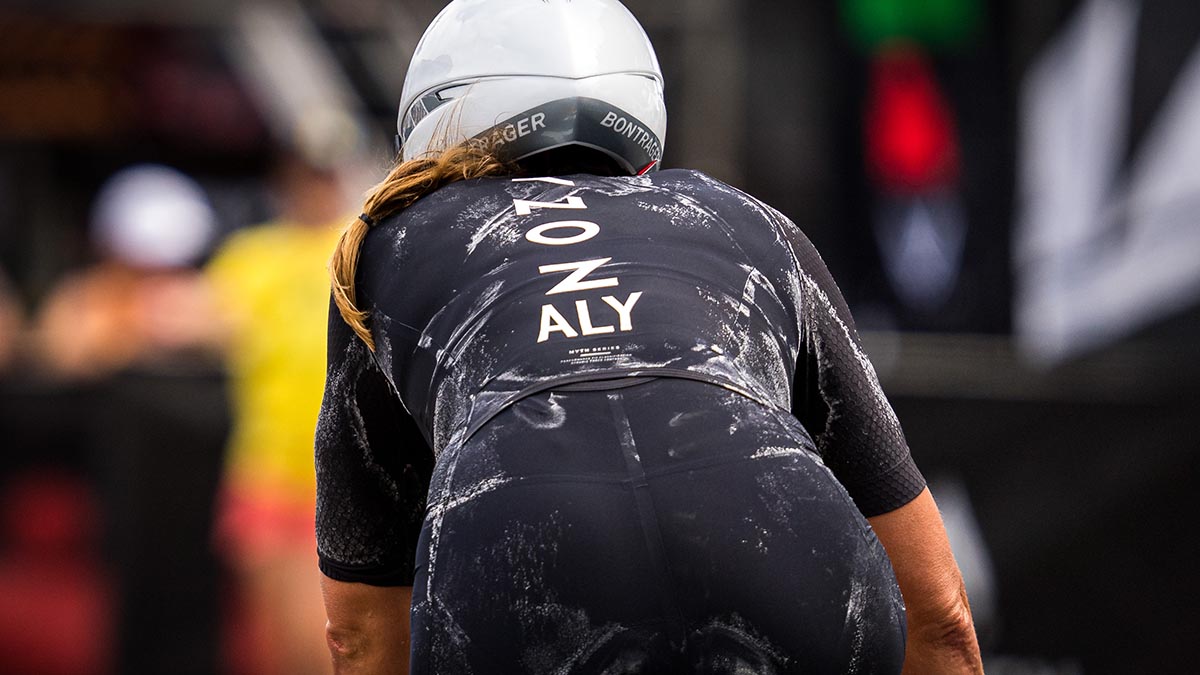
White residue on skin and kit. After a long session, salty sweaters often see visible white salt deposits on their skin, hair, or dark clothing. This is crystallised sodium chloride — the same process that leaves white tide marks on a beach. If you're finding white lines along your collar or the brim of your cap after long efforts, your sodium concentration is likely on the higher end.
Cramping that seems disproportionate to your fitness. Fit, well-trained athletes who experience significant cramping — particularly in the latter stages of long races — often turn out to be salty sweaters whose losses have been consistently underestimated.
Feeling unusually depleted after hot sessions. Not just tired — genuinely wrecked. This can reflect large sodium losses that haven't been replaced.
Craving salty foods heavily post-exercise. Your body is reasonably good at signalling what it needs. A strong craving for savoury, salty food after training is often a sodium signal.
Feeling relatively okay with poor hydration in cool conditions but struggling significantly in heat. As temperature rises, sweat rate increases and total sodium losses multiply. Salty sweaters feel the heat disproportionately.
Why it matters for product selection
This is the practical consequence: not all electrolyte products are created equal.
Many mainstream electrolyte products contain 200-400mg of sodium per serving. For an athlete with a concentration of 1,500mg/L losing 1.5 litres per hour, that's a replacement rate of under 20% of their actual losses. The deficit accumulates across a long race.
Higher-sodium products — often marketed specifically for athletes with high losses — contain 1,000mg or more per serving. Knowing where you sit on the spectrum helps you choose the right product and dose it appropriately, rather than guessing.
