What Is a Sweat Test — And Do You Actually Need One?
The term "sweat test" gets thrown around a lot in endurance sports circles, but there's still a lot of confusion about what it actually involves, what it tells you, and whether it's worth your time and money if you're not a professional athlete.
Here's a clear breakdown.
What a sweat test actually measures
A precision sweat test measures two key things:
1. Your sweat sodium concentration — how many milligrams of sodium you lose per litre of sweat. This is largely genetically determined and doesn't change significantly with fitness or training. It's also the number that matters most for electrolyte replacement.
2. Your sweat rate — how much fluid you lose per hour of exercise. This does vary based on intensity, temperature, acclimatisation, and fitness, but a baseline measurement gives you a reliable starting point.
These two numbers, when combined, tell you your total sodium losses during any given session. It's the foundation of any proper hydration strategy.
How the test works at STV
The test I use is a Precision Fuel & Hydration clinical sweat test — the same method used by professional sports teams and elite triathletes around the world.
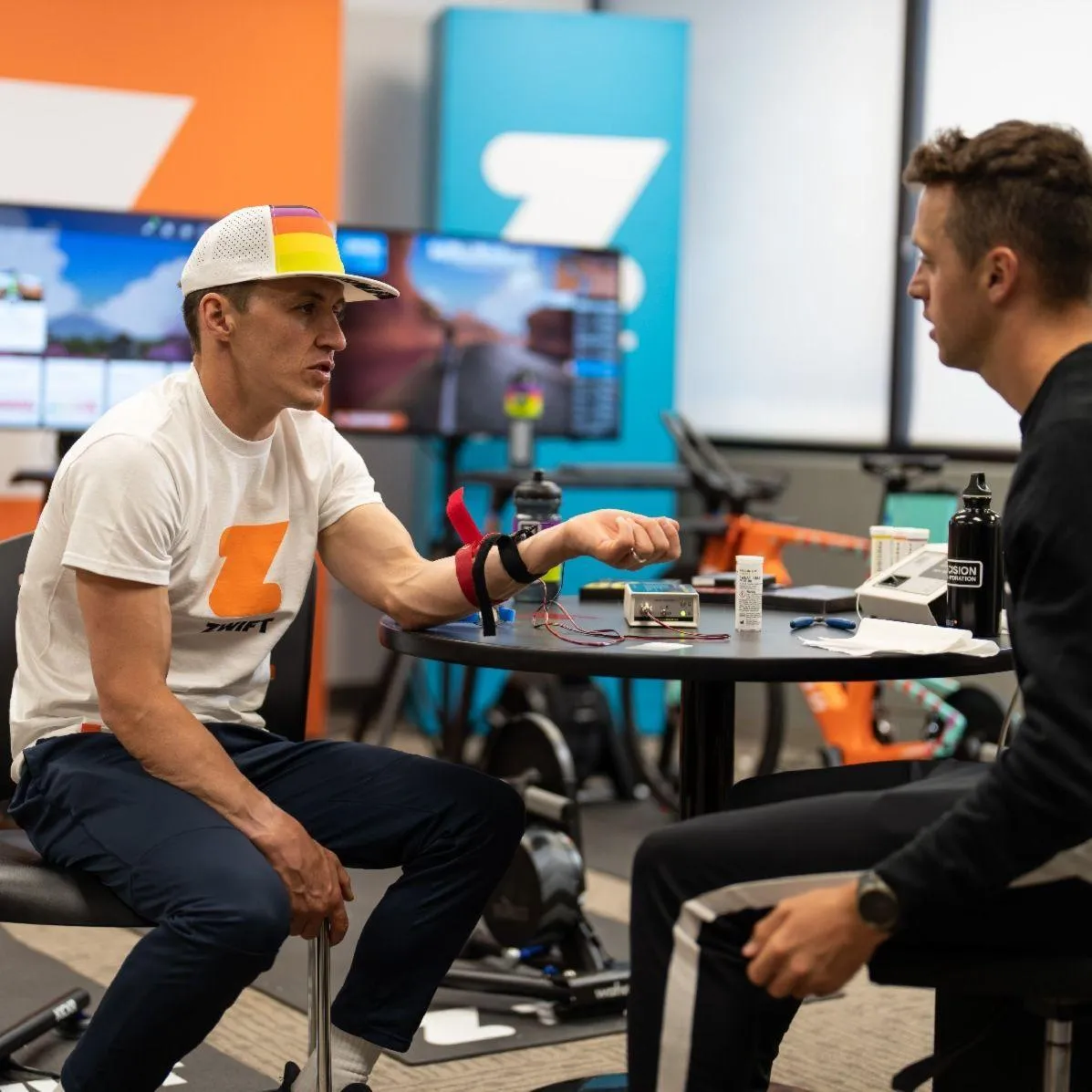
You come into the clinic. We have a conversation about your training history, racing goals, any patterns you've noticed (cramping episodes, performance fading late in races, GI issues). Then, using a small sweat-inducing device placed on your forearm, we collect a sweat sample.
No exercise required. No treadmill. The whole appointment takes 45 to 60 minutes.
The results give you your exact sodium concentration in milligrams per litre. This number becomes the foundation of everything — your training hydration, your race day plan, and the recommendations loaded into your SweatTracker app.
Who should get tested
The short answer is: any endurance athlete who trains or races for more than 90 minutes regularly.
Below that duration, the body can usually cope with water alone or generic electrolytes, assuming you've eaten reasonably. But above 90 minutes — especially in heat, or in a race context where pushing hard accelerates sweat losses — the individual differences in sodium concentration start to matter significantly.
You're particularly likely to benefit from a sweat test if you've experienced cramping during or after races, you experience performance fade in the second half of long efforts, you feel genuinely exhausted after hot training sessions even with adequate fluid intake, you've been guessing at your electrolyte strategy and getting inconsistent results, or you're preparing for a major event like an Ironman or multi-day race.
You only need to be tested once. Your sweat sodium concentration doesn't change with training — it's essentially fixed. So the investment in one test gives you data you can use indefinitely.
